
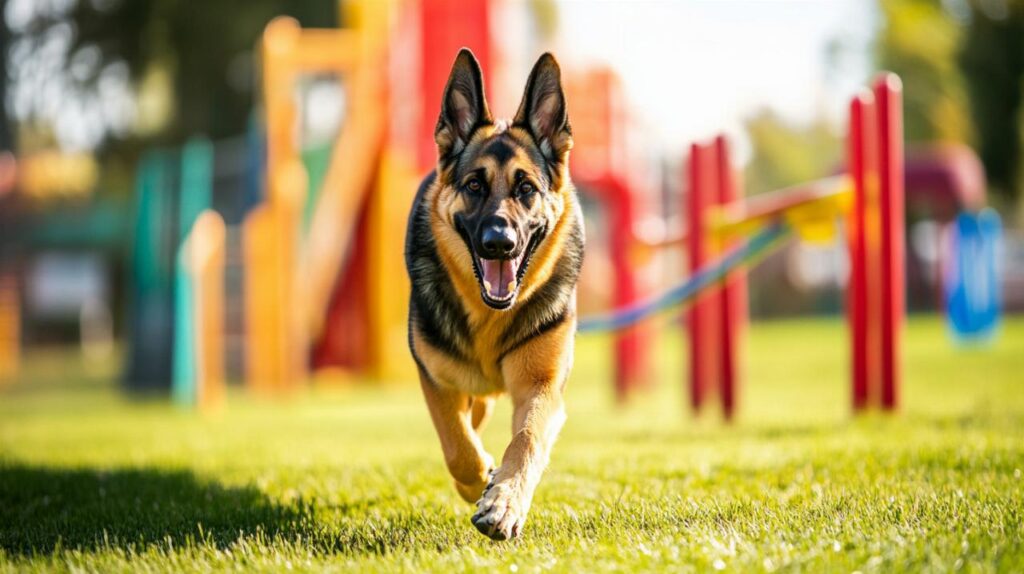
German Shepherds are renowned for their intelligence, loyalty, and remarkable physical prowess, making them outstanding candidates for a wide range of canine sports and activities. Among these pursuits, agility training stands out as a particularly rewarding discipline that challenges both the mind and body of your four-legged companion. Whether you are a first-time owner eager to explore new avenues with your pup or an experienced handler looking to refine your techniques, understanding the fundamental principles and progressive steps is essential to unlocking your dog's full potential on the agility course.
Building a Strong Foundation for Agility Training
Before you can train your german shepherd for agility and expect consistent success, it is vital to establish a solid groundwork rooted in obedience and physical readiness. These early stages are not merely preparatory; they form the bedrock upon which all advanced skills and course navigation will be built. Taking the time to develop these core competencies ensures that your German Shepherd is not only capable but also confident and eager to engage with the challenges ahead.
Establishing basic obedience and commands
The journey towards agility excellence begins with mastering essential commands such as sit, stay, come, down, and leave it. These instructions are the language through which you communicate with your dog during training and competition. German Shepherds rank third in working intelligence among 138 breeds, often learning new tasks in as few as five repetitions, which means they are exceptionally receptive to structured learning. Starting as early as eight weeks old, it is important to set clear boundaries and rules from day one, ensuring that your dog understands expectations and develops good habits early in life.
Positive reinforcement is the cornerstone of effective training. Using treats, praise, and toys to reward desired behaviours encourages your German Shepherd to repeat those actions, creating a positive association with learning. It is also crucial to keep initial training sessions short, typically between five and fifteen minutes, to maintain focus and prevent frustration. Establishing a consistent daily routine for feeding, walks, and training helps your dog know what to expect, reducing anxiety and promoting a calm, receptive state of mind. Understanding individual preferences and behaviours is key, as even within a breed, learning styles can vary significantly. Setting your dog up for success involves timing rewards appropriately and adapting your methods when progress stalls.
Mental stimulation is equally important as physical exercise for a happy and well-balanced German Shepherd. Combining physical and mental activities can significantly improve focus and confidence, which are essential attributes for agility training. Incorporating scent work, search games, and other mentally engaging tasks into your routine ensures that your dog remains sharp and enthusiastic. Early socialisation from eight weeks old, exposing your puppy to different people, animals, and situations, is vital for developing a well-rounded temperament. Positive reinforcement during these experiences helps your dog build confidence and learn to distinguish between real threats and everyday occurrences.
Developing physical fitness and conditioning
Physical preparation is just as critical as obedience training when it comes to agility success. German Shepherds are naturally athletic and energetic, requiring at least two hours of daily exercise to maintain their health and prevent behavioural issues that stem from pent-up energy. Active walks, controlled runs, and swimming are excellent ways to build stamina and muscle tone without placing undue stress on developing joints. Swimming, in particular, is a low-impact activity that supports muscle recovery while providing a full-body workout.
Proper nutrition plays a pivotal role in supporting your dog's physical conditioning. Sporting dogs need high-quality food formulated for active, large breeds to provide the energy and nutrients necessary for muscle recovery and sustained performance. Adjusting food portions based on activity level and dividing meals into smaller portions throughout the day can help prevent stomach issues, which German Shepherds can be prone to experiencing. Supplements such as omega-3 fatty acids and joint support formulas can further enhance joint health and mobility, particularly important given the breed's predisposition to conditions like hip dysplasia. Maintaining a proper weight through balanced nutrition and exercise is one of the best preventive measures you can take.
Warming up and cooling down before and after training sessions is essential to prevent injury and promote muscle recovery. Simple routines such as gentle stretching, slow-paced walks, and controlled movements prepare your dog's body for the demands of agility work. Regular veterinary checks are important to catch potential problems early, and keeping vaccinations and worming up to date ensures your dog remains in peak health. Additionally, checking your dog's paws for cuts or injuries after each session helps you address any issues before they become serious. Hydration is another crucial element; ensuring your dog has access to fresh water before, during, and after exercise supports overall wellbeing and optimal performance.
Mastering agility equipment and advanced techniques
Once your German Shepherd has developed a strong foundation in obedience and physical fitness, the next phase involves introducing agility equipment and honing the skills required for successful course navigation. This stage is where the excitement of agility truly comes to life, as your dog learns to tackle various obstacles with speed, precision, and confidence. The process requires patience, consistency, and a keen understanding of how to communicate effectively with your dog through handling skills and body language.
Introducing obstacles and course navigation
When beginning to introduce agility obstacles, it is important to start slowly and build positive associations with each piece of equipment. Low jumps, tunnels, and cones are excellent starting points that allow your dog to gain confidence without feeling overwhelmed. Each obstacle should have a specific command that your dog learns to associate with the action, such as jump, tunnel, or weave. Using rewards and encouragement during the introduction phase helps your dog view the equipment as exciting challenges rather than intimidating barriers.
Foundation skills such as body awareness, focus games, handling skills, equipment confidence, and movement sequences are critical for developing a well-rounded agility dog. Body awareness exercises help your dog understand how to control their movements and navigate obstacles with precision. Focus games enhance your dog's ability to maintain attention on you amidst distractions, which is essential during competition. Handling skills involve teaching your dog to respond to your cues and body language, creating a seamless partnership as you navigate the course together. Equipment confidence is built through gradual exposure and positive reinforcement, ensuring your dog feels secure and eager to engage with each obstacle.
Training in a controlled environment is highly beneficial during the early stages of equipment introduction. Starting with simple exercises and progressively increasing difficulty allows your dog to build skills at a comfortable pace. Patience is particularly important when working with adult dogs, who may need more time to adapt to new tasks compared to puppies. It is also essential to recognise that German Shepherds, despite their intelligence and eagerness to please, can be strong-willed and may test boundaries. Consistency in your training approach and clear communication help reinforce expectations and prevent confusion.
Many trainers and handlers find structured programmes invaluable for guiding their agility journey. Courses designed by experienced professionals, such as those offered by certified canine physiotherapists and competition veterans, provide comprehensive video lessons, downloadable resources, and structured curricula that cover everything from foundational skills to competition preparation. These programmes often include fitness sections and bonuses that support holistic development. For those seeking flexibility, self-paced learning options allow you to progress at your own speed while still benefiting from expert guidance. Active participation programmes with personalised feedback offer an even deeper level of support, helping you address specific challenges and refine your techniques.
Refining speed, accuracy and handler communication
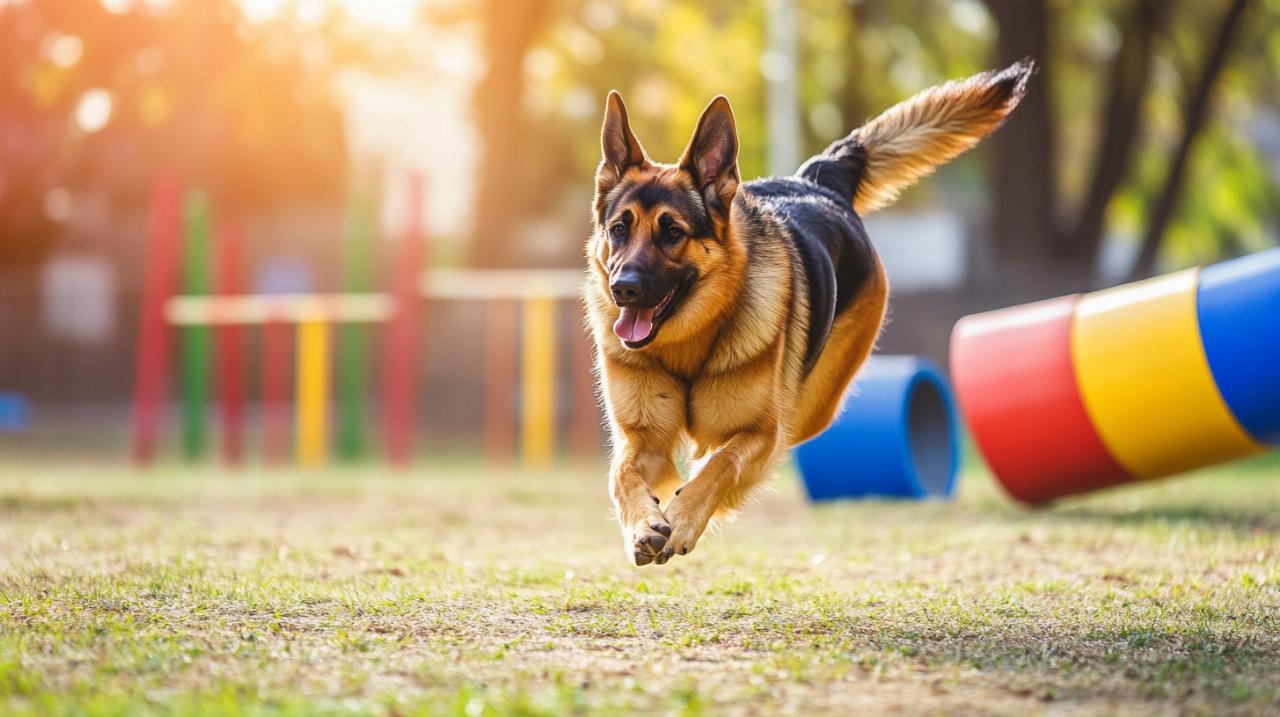
As your German Shepherd becomes more comfortable with agility equipment, the focus shifts towards refining speed, accuracy, and the subtle nuances of handler communication. This advanced stage requires a deep understanding of how to read your dog's body language and adjust your cues accordingly. Effective communication on the agility course is not just about verbal commands; it involves timing, positioning, and the ability to anticipate your dog's movements.
Training sessions should continue to be short and focused, with an emphasis on quality over quantity. Repeating exercises until they become second nature helps your dog perform with confidence and precision, even under the pressure of competition. It is important to challenge your dog progressively, introducing more complex sequences and tighter turns as their skills develop. However, always ensure that the difficulty level matches your dog's current abilities to avoid frustration and maintain motivation.
Positive reinforcement remains a powerful tool at this stage. Celebrating successes, no matter how small, reinforces desired behaviours and strengthens the bond between you and your dog. Mental stimulation continues to be important, as a mentally engaged dog is more likely to remain focused and responsive during training. Incorporating variety into your sessions, such as alternating between agility equipment, scent work, and tracking exercises, keeps your German Shepherd engaged and prevents boredom.
Advanced obedience requires precision and many hours of dedicated training. German Shepherds excel in a variety of disciplines beyond agility, including tracking, canicross, competitive obedience, therapy dog work, and search and rescue. These activities not only prevent behavioural issues that can arise from lack of stimulation but also provide additional outlets for your dog's natural abilities and instincts. For those interested in protection training, it is crucial to seek expert guidance, as this specialised work focuses on education and controlled responses rather than aggression.
Family involvement in training and daily activities is highly beneficial. Consistent boundaries and rules enforced by all family members help your dog understand expectations and feel secure. Getting your dog involved in family activities strengthens their social bonds and provides additional opportunities for learning and growth. Teaching your dog to assess situations and distinguish between real threats and non-threats is an important aspect of developing a well-rounded, confident companion.
Regular participation in classes and workshops can further enhance your skills and provide valuable socialisation opportunities for your dog. Facilities offering puppy classes, agility courses, scentwork classes, and recall training provide structured environments where you and your dog can learn alongside others. Many of these programmes also offer online courses with discount codes and money-back guarantees, making it easier to access high-quality instruction from the comfort of your home. Whether you are preparing for competition or simply seeking to enrich your dog's life, investing in ongoing education and training is one of the most rewarding decisions you can make.
In conclusion, training your German Shepherd for agility success is a journey that requires dedication, patience, and a commitment to understanding your dog's unique needs and capabilities. By building a strong foundation in obedience and physical fitness, introducing equipment gradually, and refining advanced techniques through consistent practice and effective communication, you can unlock your dog's full potential and enjoy the incredible bond that comes from working together as a team. The versatility and intelligence of the German Shepherd make them exceptional candidates for agility and a wide range of other canine sports, ensuring that both you and your dog will find fulfilment and joy in this dynamic and challenging pursuit.